
Quick Summary
- Home access control includes smart locks, doorbell cameras, garage door openers, door and window sensors, and keypad systems working together
- The right setup depends on your home's layout, your daily routine, and your existing security system
- Smartphone and tablet access is a key feature for managing your home remotely
- Professional installation ensures your components are properly integrated and functioning
- Integrity Security serves homeowners throughout the North Carolina foothills and piedmont with free estimates
What Does Home Access Control Actually Mean?
Access control, in a residential context, refers to the systems and devices that manage who can enter your home and which parts of your property they can access. While the term is often associated with commercial buildings and keycard entry systems, the same core concept applies to your front door, back gate, garage, and even your interior rooms.
The goal is straightforward: give access to the right people and keep unauthorized individuals out. What makes modern home access control particularly valuable is how well it integrates with the rest of your home security system. A smart lock paired with a doorbell camera and a connected alarm system creates a layered approach to protection that a deadbolt alone simply cannot provide.
Key Components to Look For
Not every home needs every component, but understanding what is available helps you make informed decisions. Here are the main elements that make up a comprehensive home access control setup.
Smart Locks
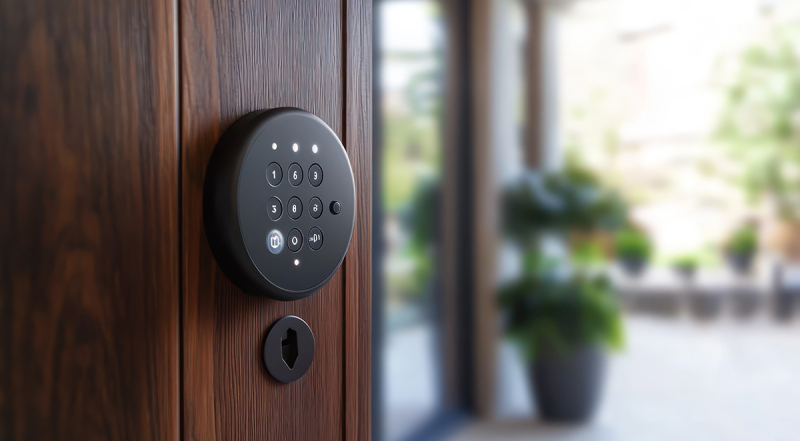
Smart locks are typically the foundation of residential access control. They replace or supplement traditional deadbolts with electronic locking mechanisms that can be controlled remotely, set to specific schedules, and monitored through an app on your smartphone or tablet.
When evaluating smart locks, pay attention to these features:
- Remote locking and unlocking: You should be able to lock or unlock your door from anywhere using a phone or tablet.
- Keypad entry: A numerical keypad allows family members or trusted guests to enter without a physical key.
- Activity logs: Quality smart locks record entry and exit events so you know when your door was opened and by whom.
- Integration with your security system: The lock should communicate with your broader alarm or automation platform.
If you want to dig deeper into the comparison between smart locks and traditional deadbolts, our blog Smart Locks vs. Traditional Deadbolts walks through the differences in detail.
Doorbell Cameras
A doorbell camera does double duty: it serves as a visual deterrent and gives you a live view of who is at your front door before you ever open it. Many doorbell cameras include two-way audio so you can speak with a visitor from your phone, even when you are not home.
When choosing a doorbell camera, look for:
- Clear video resolution, especially in low-light or nighttime conditions
- Motion detection that triggers alerts to your phone
- Two-way audio capability
- Integration with your existing security cameras and monitoring setup
Read our blog about motion sensor light placement.
Door and Window Sensors
Door and window sensors are small, unobtrusive devices that alert you when an entry point is opened. For access control purposes, they serve as an early warning system, letting you know the moment a door or window is breached or opened unexpectedly.
These sensors work best when they are:
- Connected to your home's central alarm panel
- Configured to trigger alerts to your smartphone
- Set up on all primary entry points, including garage doors, back doors, and basement windows
Garage Door Openers and Control
Your garage door is one of the most commonly overlooked access points in a home. A connected garage door opener gives you the ability to open, close, and monitor your garage from your phone. This is especially useful if you have family members who need access at different times or if you simply want to confirm the garage is closed before going to bed.
Integrated garage door control pairs naturally with a full automation setup and adds another layer of accountability to your home access system.
Keypads and Security Panels
A security keypad at your main entrance gives household members a consistent and reliable way to arm or disarm the alarm and verify their entry. When combined with smart locks, a keypad creates a two-factor style setup where both a code and a physical mechanism are involved in managing access.
Modern panels also connect to your smartphone, meaning you can arm or disarm your system remotely when needed.
Access control vs. traditional locks: read our blog
How These Components Work Together
The real power of home access control comes from integration. When your smart lock, doorbell camera, door and window sensors, garage door opener, and security panel are all connected to the same platform, you get a unified view of your home's entry points in one place.
Here is an example of how a typical sequence might work:
- A visitor approaches your door and rings the doorbell camera.
- You receive a notification on your phone with live video.
- You speak to the visitor through two-way audio.
- If appropriate, you remotely unlock the smart lock to let them in.
- The door sensor logs the entry, and your security panel registers the activity.
- After a set time, the smart lock automatically re-locks.
This kind of connected workflow gives you meaningful oversight without requiring you to be physically present. It also creates a record of entries and exits that can be referenced if a question ever arises.
What to Consider Before Choosing a System
Before selecting products, it helps to think through your specific situation. A few questions worth asking:
- How many entry points does your home have? Front door, back door, garage, and side entrances all deserve attention.
- Do you have children or elderly family members who may need simpler access? Keypad codes may be easier than smartphone-controlled locks for some family members.
- Do you travel or work away from home regularly? Remote access and monitoring features become significantly more important in those situations.
- What system do you already have in place? New components should be compatible with your existing alarm or automation setup.
- Do you want professional monitoring? Local monitoring, like what Integrity Security provides through its monitoring center in Statesville, NC, can add an important layer of response capability.
The Value of Professional Installation
Home access control can look straightforward online, but proper installation makes a genuine difference in how reliably everything performs. Devices need to be positioned correctly, connected to your network and alarm system accurately, and tested to confirm they communicate as intended.
A professional installer also helps you identify access points you may have overlooked and ensures your components are set up to work together rather than as isolated pieces. With Integrity Security, every installation includes a thorough assessment of your property so that your access control and security systems provide the maximum coverage for your investment.
You can explore the full range of residential security services available to homeowners across the North Carolina foothills and piedmont, or contact our team for a free estimate.
Frequently Asked Questions
Can I add access control to my existing home security system?
In most cases, yes. Many smart locks, doorbell cameras, and sensors are designed to integrate with existing security panels and automation platforms. A professional assessment can confirm compatibility and identify the best path forward for your specific setup.
Do I need a smartphone to use home access control?
Smartphones and tablets are the most common way to manage access control remotely, and most modern systems are built around app-based control. That said, keypad entry and manual override options are available on most devices so that household members without smartphones can still get in and out without difficulty.
Is there a monthly fee for home access control?
It depends on the components involved. Basic smart locks and sensors generally do not require a monthly fee. However, features like professional 24/7 monitoring are typically subscription-based services. Integrity Security is transparent about pricing and does not lock customers into long-term contracts.
What happens if the power goes out?
Most smart locks include battery backups or emergency manual key options to ensure you are never locked out during a power outage. When discussing your setup with a professional installer, this is a good question to raise so you understand exactly how each component behaves during an outage.
How do I know which entry points need sensors or smart locks?
Start with the most frequently used and most visible entry points: your front door, back door, and garage. From there, a professional security assessment can help identify secondary entry points like basement doors, side gates, or ground-floor windows that may also benefit from coverage.
Conclusion
Access control for your home is not a single product. It is a coordinated approach to managing who enters your property, when, and through which doors. Smart locks, doorbell cameras, door and window sensors, garage door controls, and security keypads each play a role, and they work best when they are installed and integrated thoughtfully.
If you are a homeowner in the North Carolina foothills or piedmont region and you are ready to take a closer look at your access control options, Integrity Security is here to help. Our team has 50 years of combined experience in residential security, and we offer free estimates with no pressure and no long-term contracts. Reach out to us today to get started.